
Cornerstone® Customized Monolith
For customers requiring specific resins beyond our standard catalog, for novel or challenging downstream processes, our Cornerstone Customized Monolith services offer the development and preparation of innovative customized monoliths tailored to enhance purification efficiency. The custom-designed monoliths are suitable for both research and large-scale GMP-regulated manufacturing of biopharmaceuticals.
Why Choose Cornerstone Customized Monoliths?
- Ligand of Your Choice: Select a specific ligand for immobilization or benefit from our expert guidance to help you select the ideal ligand for your process.
- Tailored Solutions: Choose from a variety of monolith formats and channel sizes to perfectly match your specific requirements.
- Expertise: Our team of scientists and engineers is experienced in coupling diverse ligands to monolithic chromatographic surfaces, like small organic molecules, oligonucleotides, aptamers, proteins, peptides, enzymes, and antibodies. Additionally, various activated monoliths, such as streptavidin, maleimide, and bromoacetyl, are available upon request, providing flexibility for autonomous ligand immobilization.
- Rapid Production and Flexible Timelines: We are committed to delivering monoliths quickly and accommodating your timeline requirements.
Our Offerings | Customize Your Monolith
-
Monolith Format
- CIMmic®: 0.1 mL chromatographic column for screening
- CIMmultus®: 1-8000 mL chromatographic columns for preparative applications
- CIMac: 0.1 mL analytical columns for HPLC monitoring and quantification of target molecules
- CIM® Well Plates: 96, 48 or 24 wells with each well volume ranging from 0.05 mL up to 1 mL for diagnostic application
-
Channel Size
- 1.3 μm: optimal for protein chromatography and analytes with molar mass below 500 kDa
- 2 μm: optimal for DNA molecules, viruses, VLPs and similar molecules with hydrodynamic radius below 100 nm
- 6 μm: optimal for large viruses and DNA
-
Type of Monolith
- Affinity
- IEX
- HIC
- Reversed phase
- Activated
-
Immobilized Ligand
- Small organic molecule
- Oligonucleotide
- Aptamer
- Peptide
- Protein
- Antibody
- Enzyme
- Nanobody
Have Your Process Developed in 4 Simple Steps
- Contact us Reach out by completing the contact form or emailing us at support@biaseparationsinc.com. Share your requirements and we will establish a work plan.
- Technical Offer Based on your needs and scope, we will prepare an offer along with all necessary documentation.
- Execution Once the plan is confirmed and the purchase order is received, we begin with the development of custom monoliths. For more extensive projects this may also involve formalizing agreements through a contact.
- Post-Development Support: After completion, benefit from ongoing support and guidance to maximize the effectiveness of custom monolith in your applications.
Timelines & Workflow
Cornerstone service offers great flexibility tailored to your specific needs. Whether you require only a feasibility study, large-scale prototypes, or the commercialization of your product, our services are designed to accommodate your unique requirements.
Custom Monolith Development: From Feasibility to Functionality
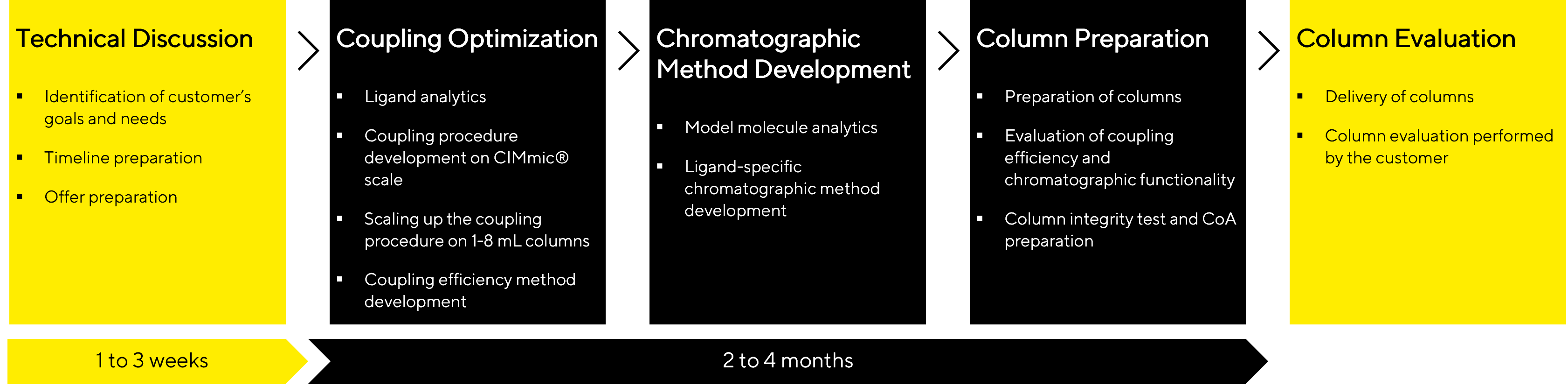
The development of custom monoliths begins with a feasibility study, typically lasting two months. This study includes optimizing ligand coupling and producing small-scale prototype monoliths (0.1, 1, 4, or 8 mL).
Our approach utilizes a variety of starting activated monoliths, providing a solid foundation for immobilizing diverse ligands and forming stable covalent linkages with the monolith matrix. The covalent nature of the bond between the ligand and matrix minimizes leaching and enhances stability and reusability. For each specific ligand, we determine the optimal coupling conditions, as conditions suitable for one molecule may not be optimal for another, even with similar structures.
To demonstrate the chromatographic functionality of the prepared columns, the feasibility study optionally includes the development of ligand-specific chromatographic methods using a model molecule. This additional step extends the duration of the feasibility study, depending on the complexity of setting up the functional test procedure.
Large-Scale Prototypes: Advancing to Industrial Scale
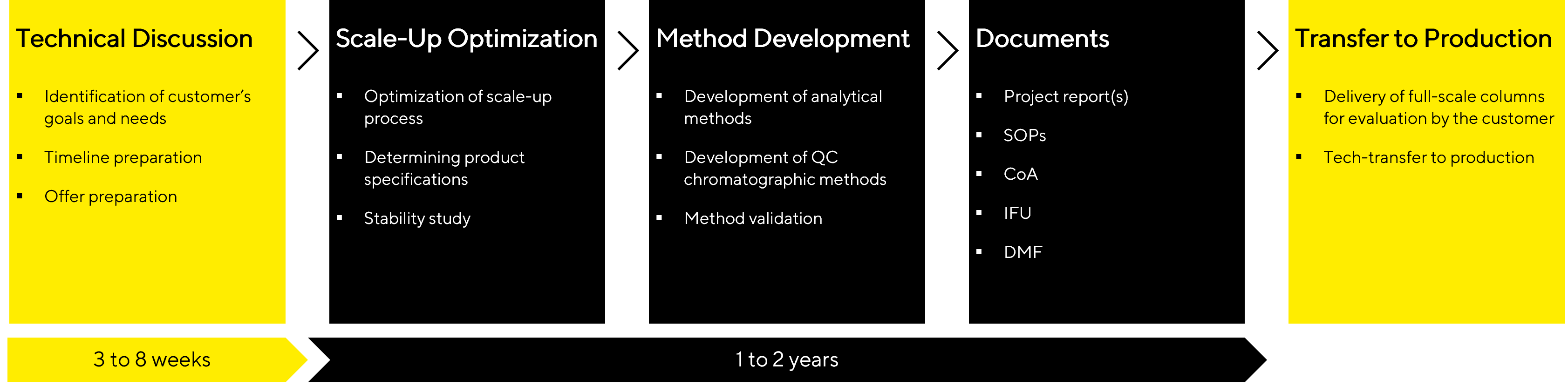
When small-scale prototypes demonstrate promising results, Cornerstone Customized Monolith services offer the preparation of large-scale prototypes (40, 80, 400, 800, 4000 and 8000 mL). If a ligand-specific chromatographic method was not developed during the feasibility study, we recommend its development to ensure the complete functionality of the columns.

Commercialization: Bringing Your Innovations to Market
When large-scale prototypes meet downstream process requirements, Cornerstone Customized Monolith services offer a tech transfer of customized prototypes to production. This comprehensive process involves optimizing coupling scale-up to the required production scale (up to 8000 mL) to ensure reproducible production. It also includes the validation of analytical and QC chromatographic methods, providing detailed reports, SOPs, training and on-site support.
We can establish an exclusive product line within our GMP facility or transfer the procedures for coupling, analytical, and chromatographic methods to enable product production at your manufacturing site.
Case Studies
Monolithic chromatographic columns with immobilized oligonucleotides or aptamers are globally recognized for their exceptional performance in affinity-based separation of nucleic acids, proteins, virus-like particles, viruses, exosomes, and nanoparticles. We specialize in optimizing binding conditions for various oligonucleotides and aptamers, ensuring tailored solutions for specific applications. Our ability to efficiently translate this knowledge to industrial processes is exemplified by the CIM® Oligo dT18 chromatographic line.
Examples:
When a multimodal stationary phase is needed for improved separation of target molecule, and the ideal column isn’t available in our standard catalog, we offer custom immobilisation of various organic molecules onto chromatographic monolith surfaces to meet your unique requirements.
Examples:
Chromatographic monoliths, coupled with specific polyclonal or monoclonal antibodies, serve as highly specific immunoaffinity stationary phases for targeted antigen interaction. The large channels within the monoliths are optimal for antibody coupling, enabling efficient and rapid interaction with antigens in feed solutions. By choosing the optimal activated matrix material, we achieve precise antibody orientation with the Fab region oriented into the channel lumen, enhancing both performance and specificity.
Examples:

- Semi-High-Throughput Isolation and N-glycan Analysis of Human Fibrinogen Using Monolithic Supports Bearing Monoclonal Anti-Human Fibrinogen Antibodies
- Depletion of Human Serum Albumin in Embryo Culture Media for In Vitro Fertilization Using Monolithic Columns with Immobilized Antibodies
- Comparative Analysis of Transferrin and IgG N-glycosylation in Two Human Populations
Enzymes immobilized on monolithic stationary phases function as highly efficient biocatalytic reactors, enabling rapid and selective transformation of biomolecules such as nucleic acids, proteins, and small organic molecules. Our service focuses on optimizing enzyme coupling onto stationary phases and developing methods for substrate conversion determination.
Examples:
- Towards Automation in Protein Digestion: Development of a Monolithic Trypsin Immobilized Reactor for Highly Efficient On-line Digestion and Analysis
- Production of β-Lactoglobulin Hydrolysates by Monolith Based Immobilized Trypsin Reactors
- Influence of the Methacrylate Monolith Structure on Genomic DNA Mechanical Degradation, Enzymes Activity and Clogging
- Preparation and Characterisation of Ribonuclease Monolithic Bioreactor
Peptides and proteins immobilized on monolithic columns act as selective affinity ligands, facilitating targeted purification, biomarker enrichment, and interaction studies. We provide the expertise and tools to couple a diverse range of peptides and proteins to monolithic chromatography columns, ensuring their stability and bioactivity. Our well-established custom immobilisations include the coupling of proteins like streptavidin, protein A, protein G, and prokaryotic lectins.
Examples:
Nanoparticles, whether inorganic or organic, can be efficiently coupled to monolith supports with appropriately sized channels. This immobilization simplifies their use by ensuring controlled conditions for interactions between the nanoparticles and the molecules they interact with.
Examples:
Do You Have a Question?
FAQ About Custom Chromatography Services
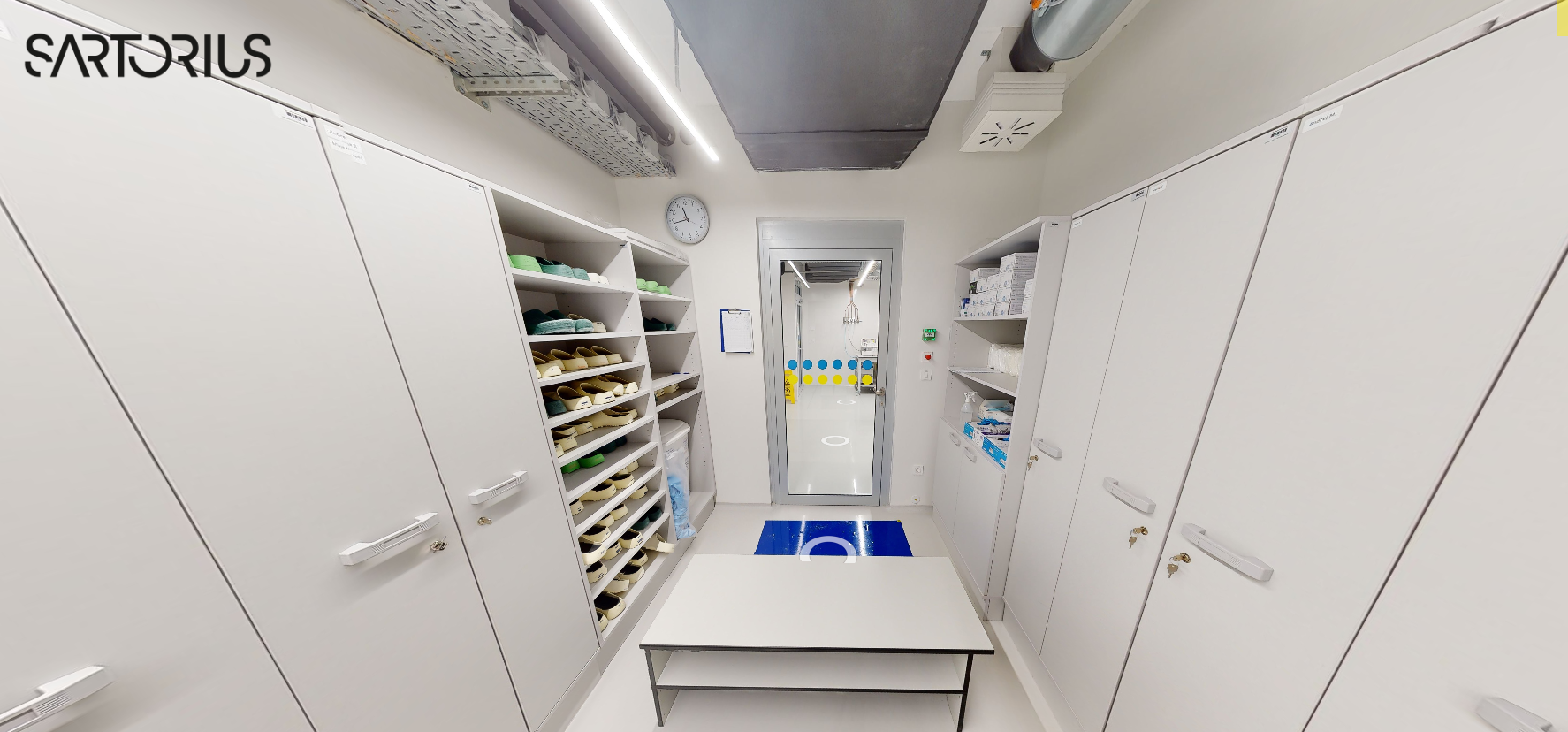
Our facilities are located in Wilmington, Slovenia. We can support you with process development in our modern, fully-equipped BSL 1 and 2 facilities. Take a virtual tour of our laboratories.
Consult Our Experts
Our experts would be happy to discuss your project. Fill the contact form below or send us an email to support@biaseparationsinc.com