Cornerstone® Process Development Services for bacteriophages focus mainly on the downstream solutions, however we can offer also the upstream part with phage expression. In downstream processing, we specialize in single-step or full processes, especially the development of capture and polishing steps.
Our services ensure process verification, focusing on capacity, robustness, and scale-up. We achieve 99% DNA and 99% protein removal, along with over 7 log endotoxin removal. We provide detailed reports with results and SOPs and offer training and technology transfer. Our processes ensure purity suitable for injectable applications.
Step Optimization in Bacteriophage Downstream Processing
TFF is often used to concentrate large volumes and remove impurities. However, this process exposes bacteriophages to shear stress, is time-consuming, and does not completely remove impurities.
When using monoliths, we can skip the TFF step and proceed directly to the capture step, as monoliths enable high flow rates due to convective mass transfer, without shear stress.
Bacteriophages differ in size and properties, which can impact their binding. The channel size of the chromatographic media must be chosen according to the size of the particles.
We perform the capture on CIMmultus OH and test different salts to achieve optimal binding conditions and elution.
- 6 μm channels minimize backpressure issues
- multi use columns that rely on convective flow
- great results: 80-100% recovery | 2-4 log protein depletion | 1-3 log DNA depletion
For the production of bacteriophages from gram-positive bacterial lysate it is important to remove proteins and DNA.
For the production of bacteriophages from gram-negative bacterial lysate it is also important to remove ETX besides DNA and proteins.
For gram-positive lysates we propose CIMmultus QA.
60-100% recovery | Additional 2 log protein removal | Additional 1 log DNA removal | 4 log ETX reduction
For gram-negative lysates we propose CIMmultus PrimaS.
60-100% recovery | Additional 2 log protein removal | Additional 1 log DNA removal | 7 log ETX reduction
We always choose the optimal approach based on clients requirement on purity and purpose of the bacteriophages being produced.
Additional TFF is usually required for the final formulation step in order to exchange the process buffer for the formulation buffer.
We adjust the polishing step so that the elution buffer matches the formulation buffer, thus avoiding the additional TFF step
Some bacteriophages are too large for filtration with 0.22 µm filters.
The columns undergo ETX testing and are available in a sterile format, allowing the entire process to be conducted under sterile conditions to prevent the introduction of contaminants.
The Role of Analytics in Bacteriophage Downstream Processing
We use a combination of the PATfix at-line analytical system and plaque assay. PATfix plays a crucial role in establishing the process and is faster than plaque assay, as it requires just 30 min to analyze a sample.
TFF is often used to concentrate large volumes and remove impurities. However, this process exposes bacteriophages to shear stress, is time-consuming, and does not completely remove impurities.
When using monoliths, we can skip the TFF step and proceed directly to the capture step, as monoliths enable high flow rates due to convective mass transfer, without shear stress.
Bacteriophages differ in size and properties, which can impact their binding. The channel size of the chromatographic media must be chosen according to the size of the particles.
We perform the capture on CIMmultus OH and test different salts to achieve optimal binding conditions and elution.
- 6 μm channels minimize backpressure issues
- multi use columns that rely on convective flow
- great results: 80-100% recovery | 2-4 log protein depletion | 1-3 log DNA depletion
For the production of bacteriophages from gram-positive bacterial lysate it is important to remove proteins and DNA.
For the production of bacteriophages from gram-negative bacterial lysate it is also important to remove ETX besides DNA and proteins.
For gram-positive lysates we propose CIMmultus QA.
60-100% recovery | Additional 2 log protein removal | Additional 1 log DNA removal | 4 log ETX reduction
For gram-negative lysates we propose CIMmultus PrimaS.
60-100% recovery | Additional 2 log protein removal | Additional 1 log DNA removal | 7 log ETX reduction
We always choose the optimal approach based on clients requirement on purity and purpose of the bacteriophages being produced.
Additional TFF is usually required for the final formulation step in order to exchange the process buffer for the formulation buffer.
We adjust the polishing step so that the elution buffer matches the formulation buffer, thus avoiding the additional TFF step
Some bacteriophages are too large for filtration with 0.22 µm filters.
The columns undergo ETX testing and are available in a sterile format, allowing the entire process to be conducted under sterile conditions to prevent the introduction of contaminants.
Why Choose Cornerstone® Bacteriophage Process Development Services?
By partnering with us, you’ll benefit from:
- Significantly improved purity suitable for injectable applications for phage-based therapies (low endotoxins, proteins, DNA and other)
- Purification processes that is scalable for large-scale production while maintaining phage integrity and activity
- Fast and effective process development with all supporting data and knowledge transfer
- Improving your process with cutting-edge analytical tools with PATfix
Hear From Our Customers
“We are especially grateful that BIA Separations shared, and operated, with the same sense of urgency we did to help bring gene therapy to the SMA community. BIA’s experience with AAV purification and its chromatographic technology were important contributions and we look forward to our continued work together.” – Andy Stober, Senior Vice President of Technical Operations, AveXis
Read more
Working with BIA Separations, Inc., Pharmaron was able to extend its toolbox of AAV purification solutions, providing multiple-modality options to achieve robust separation of genome-containing (full) from genome-free (empty) viral capsids with high purity and yield for multiple AAV serotypes. During this collaboration, a strong partnership was developed leading to Sartorius BIA separations presenting the work at the second webinar of the Pharmaron Cell and Gene Therapy webinar series. The webinar was entitled “Downstream AAV Production: A Targeted Approach to Optimization”.
Read more
“I highly appreciated the willingness of each expert from different monoliths and various applications to support our work, explain new methods, introduce new approaches, and offer further technical support in our product development. I feel like I can really delve into the depths of product characterization, and I believe I can gain much more data from the PATfix system, which I’m really eager to explore in the future.” – Sonia Celej, Bioprocess Development Specialist, Theriva Biologics
Read more
Do You Have a Question?
FAQ About Bacteriophage Process Development
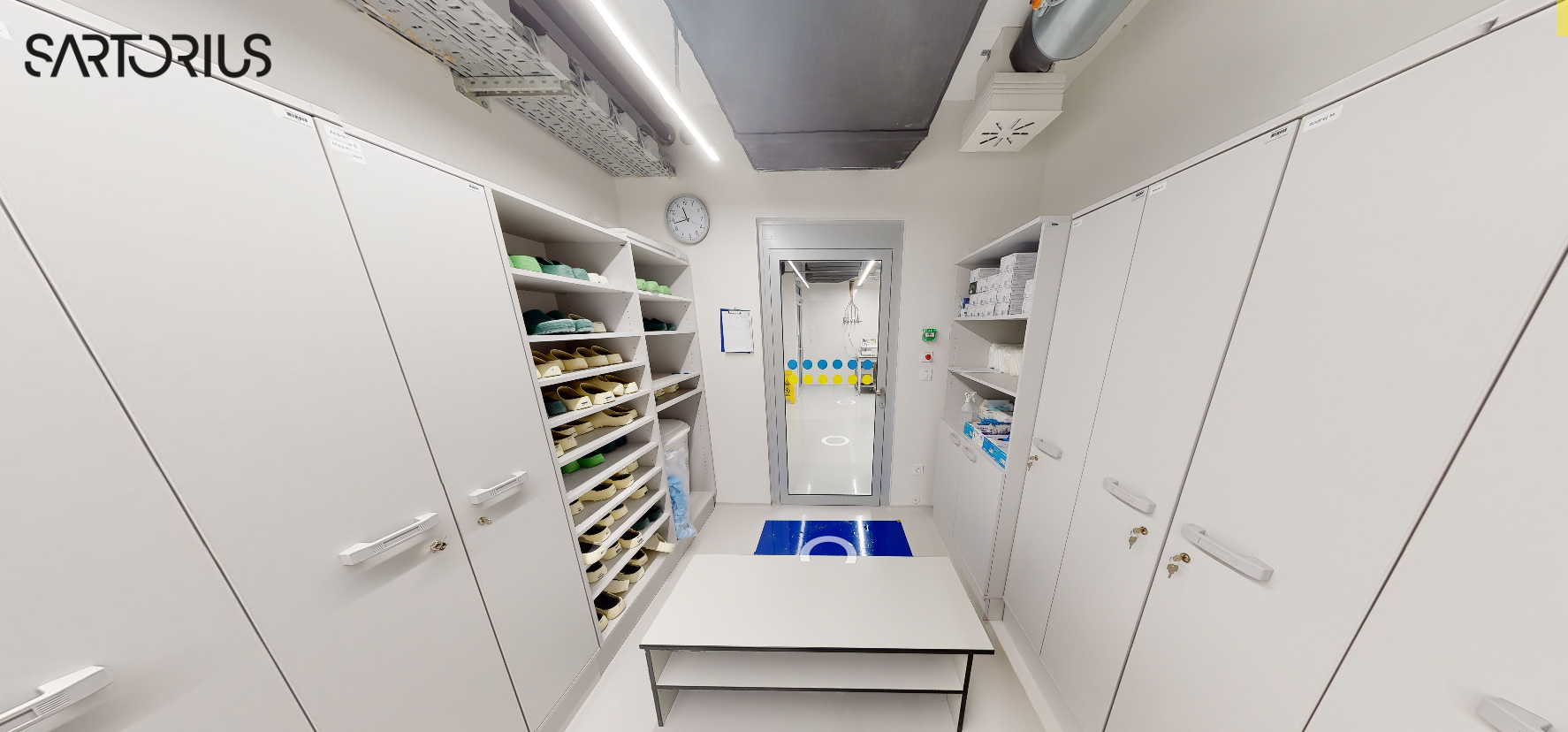
Our facilities are located in Wilmington, Slovenia. We can support you with process development in our modern, fully-equipped BSL 1 and 2 facilities. Take a virtual tour of our laboratories.
We recommend a two-step process for phage purification. The first step is a capture step using CIMmultus OH, where we concentrate the phage and remove host cell proteins, DNA, and media components in the presence of precipitating salts. This is a universal step that has been tested on more than 20 different phages. The second step is the polishing step, which is performed using PrimaS, QA chemistries or other in-house technologies. The choice of chemistry for the polishing step depends on the specific properties of the phage. This step further reduces proteins, DNA, and endotoxins.
The recommended channel size depends on the size of your bacteriophage. For phages like T4, we recommend using 6 µm channel columns for the initial purification step (OH step) due to their better backpressure performance with cruder samples and larger target molecules. For the polishing step, a 2 µm channel size is recommended.
In our experiences, most endotoxins are removed during polishing step using multimodal CIMmultus PrimaS column; in this step, we can remove up to 7 log of endotoxins.
|
Infectivity recovery |
ETX removal |
Protein removal |
DNA removal |
| Capture
CIMmultus OH |
80-100 % |
/ |
98 % |
>99 % |
| Polishing (option 1)
CIMmultus PrimaS |
60-100 % |
5-7 log |
99 % |
99 % |
| Polishing (option 2)
CIMmultus QA |
60-100 % |
4 log |
99 % |
99 % |
We usually recommend a two-step purification process. In the first step, we concentrate the phage and remove most of the proteins, DNA, and media components. In the second chromatographic step, we further remove proteins and DNA, as well as other impurities such as endotoxins.
The binding capacity depends on the volume being loaded and the concentration of the phage and contaminants that will bind to the column. We typically test this for each type of sample individually. However, for phages like T7 or M13, the capacity is usually greater than 1E+13 PFU/mL of monolith.
We recommend testing the capture of clarified lysate without the TFF step and proceeding directly to the second polish step. Monoliths exert less shear stress on the phage compared to TFF, where the phage is concentrated. Additionally, the recovery rate during the capture step is typically around 100%.
This question is complex and requires a better understanding of your specific situation. We recommend filling out the contact form to get in touch with our tech support team. They will assist you further, and if necessary, our process development team may suggest conducting a feasibility study to address your needs comprehensively.
Consult Our Experts
Our experts would be happy to discuss your project. Fill the contact form below or send us an email to support@biaseparationsinc.com