
AAV Processing Made Simple: Your Guide to Empty and Full Separation Success
Adeno-associated viral (AAV) capsids are pivotal in gene therapy, offering promising solutions for various genetic disorders. The separation of empty (E) and full (F) AAV capsids is a critical step to ensure the efficacy and safety of gene therapy products. Empty capsids can pose immunological risks and compete with full capsids for binding to target cells, potentially requiring higher vector doses. This blog explores the development of a robust AAV E/F separation process, providing insights into efficient and scalable purification methods.
Highly Reproducible AAV PurificationUnderstanding the Separation Process
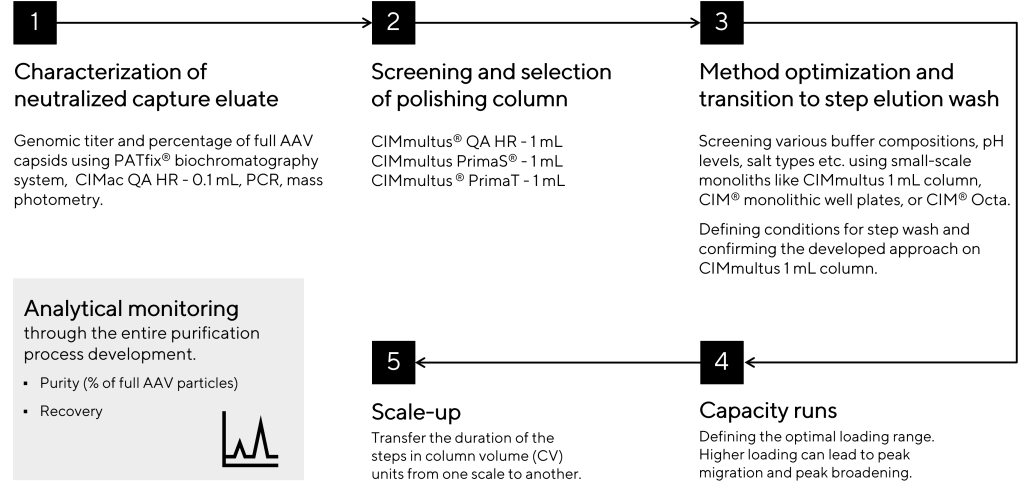
- Initial Sample Characterization:
The separation of empty and full AAV capsids is complex due to their similar biophysical characteristics. To address this challenge, a systematic approach to purification process development is essential. The process typically begins with initial sample characterization using advanced analytical tools, complemented by orthogonal analytics such as mass photometry (MP) and PCR. These techniques provide a comprehensive understanding of the sample’s composition and purity stage, required for effective purification process development.
- Screening and Selection of Column Chemistry:
After understanding the sample composition, the next step is screening and selection of a polishing column chemistry to determine the most suitable column for the specific AAV sample. Unlike conventional anion exchange (AEX) columns, which are widely used for the polishing step, specialized monolithic columns, offer a new generation of technology that ensures consistent elution within a narrow conductivity range, enhancing both purity and recovery. Multimodal columns can also be considered in the initial screening of chromatographic media.
The recommended approach for screening different chromatographic media for the AAV E/F separation step is to employ a linear gradient, which allows determination of the elution conductivity values of different AAV capsids (e.g., empty AAV, partially filled AAV, and full AAV). Once the monolith column chemistry is selected, process development continues with method optimization using small-scale CIM monolith units.
- Process Optimization:
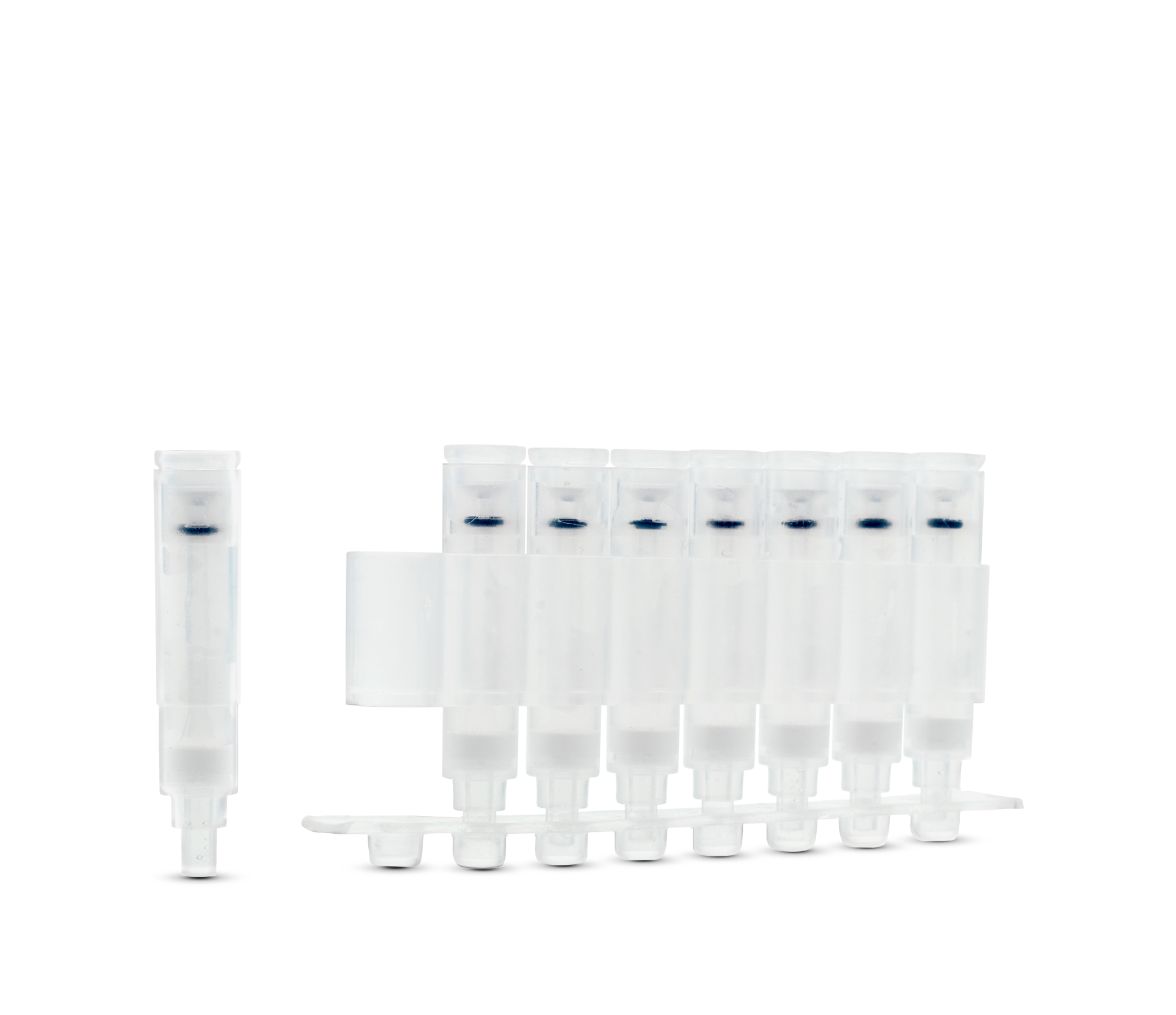
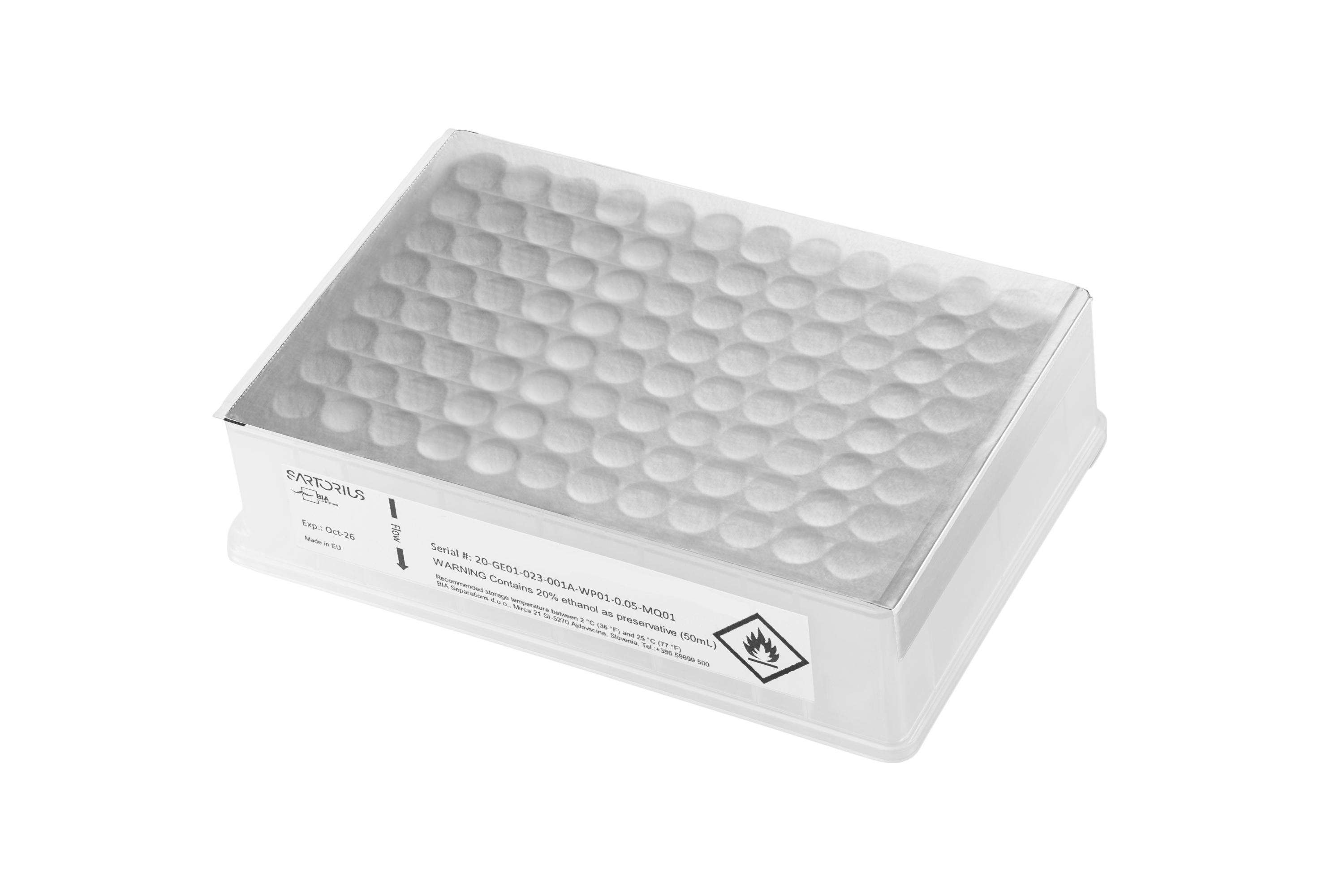
Monolithic well plates play a pivotal role in high-throughput screening of various conditions, including buffer compositions, pH levels, and salt concentrations, to maximize recovery and full capsids purity. Additionally, small-scale miniaturized eight-in-line columns are invaluable tool for refining the process. Once optimal parameters on monoliths for high throughput screening are identified, it is recommended to confirm the purification results on small-scale column volume.
- Loading Density and Elution Strategy:
Before defining conditions for step elution, it is crucial to determine the optimal AAV loading density range. To reduce sample consumption, it is advised to utilize small-scale column volume.
For optimal AAV E/F separation, various strategies can be implemented to streamline the process and reduce buffer consumption. Conventional bind-elute mode on a large scale is often replaced by alternative approaches, such as the weak partitioning method or flow-through mode, ensuring a simplified and less error-prone process.
- Scale-Up:
The final step in process development is scaling up, which is straightforward when using monoliths, as they enable high flow rates without affecting resolution and capacity. The duration of chromatographic steps, such as equilibration, wash, elution, CIP, and neutralization, can be easily adjusted by maintaining the duration of each step, measured in column volume (CV) units.
Tools for Upstream Process Development
For high-quality AAV drug products, upstream processes should work hand in hand with downstream processes, focusing on AAV purity and titer. To facilitate early process development, the advanced switching platform serves as an excellent tool, enabling rapid and accurate detection of AAV E/F capsids in the harvest sample. This approach allows selection of upstream process delivering high titers and high proportion of full AAV in the harvest AAV sample, thereby reducing downstream efforts and costs.
The robustness of AAV downstream processing is crucial when transitioning from research and development to manufacturing scale. By integrating proposed strategies, the AAV purification process becomes more efficient, ensuring the production of safe AAV gene therapy products.
Our Solutions to Simplify AAV Processing
Polishing columns | Scale-Up:
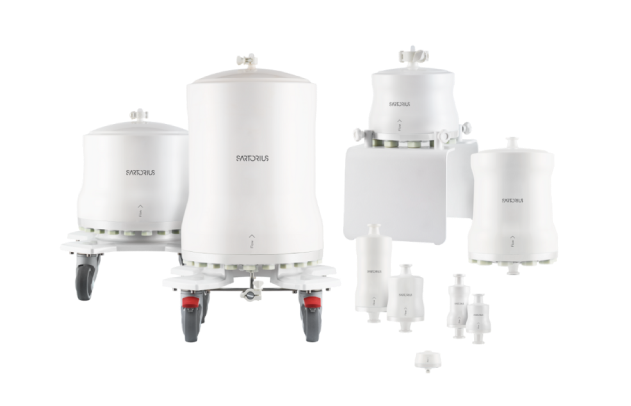
- CIMmultus® QA HR – Strong AEX, High Reproducibility between batches and different scales
- CIMmultus PrimaS® HR and CIMmultus® PrimaT – Multimodal ligand that allows binding of AAV in neutral pH values
Method optimization with small-scale monoliths:
- CIMmultus® 1 mL column
- CIM® Monolithic Well Plates
- CIM® Octa
Analytical monitoring through the entire purification process development:
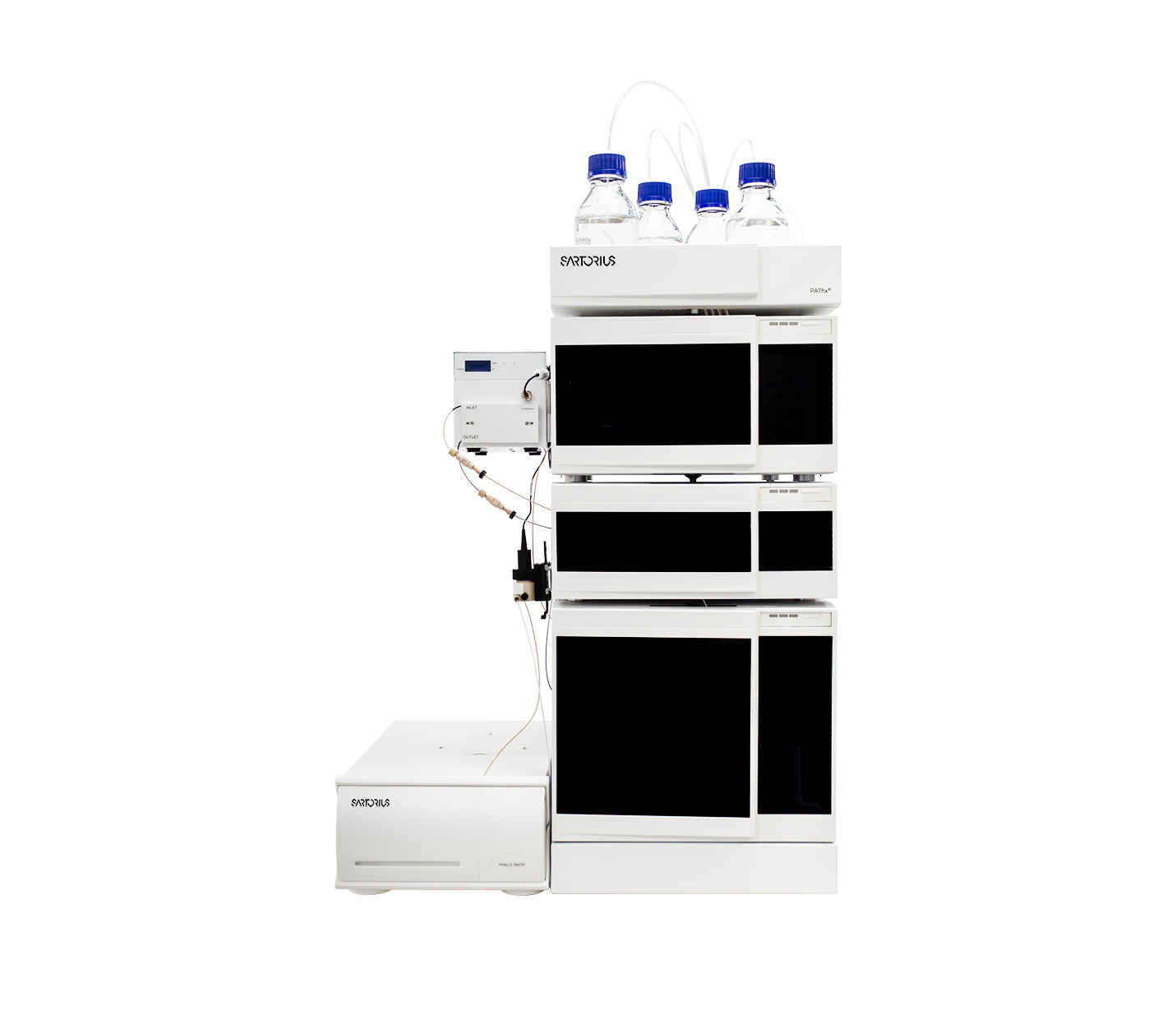
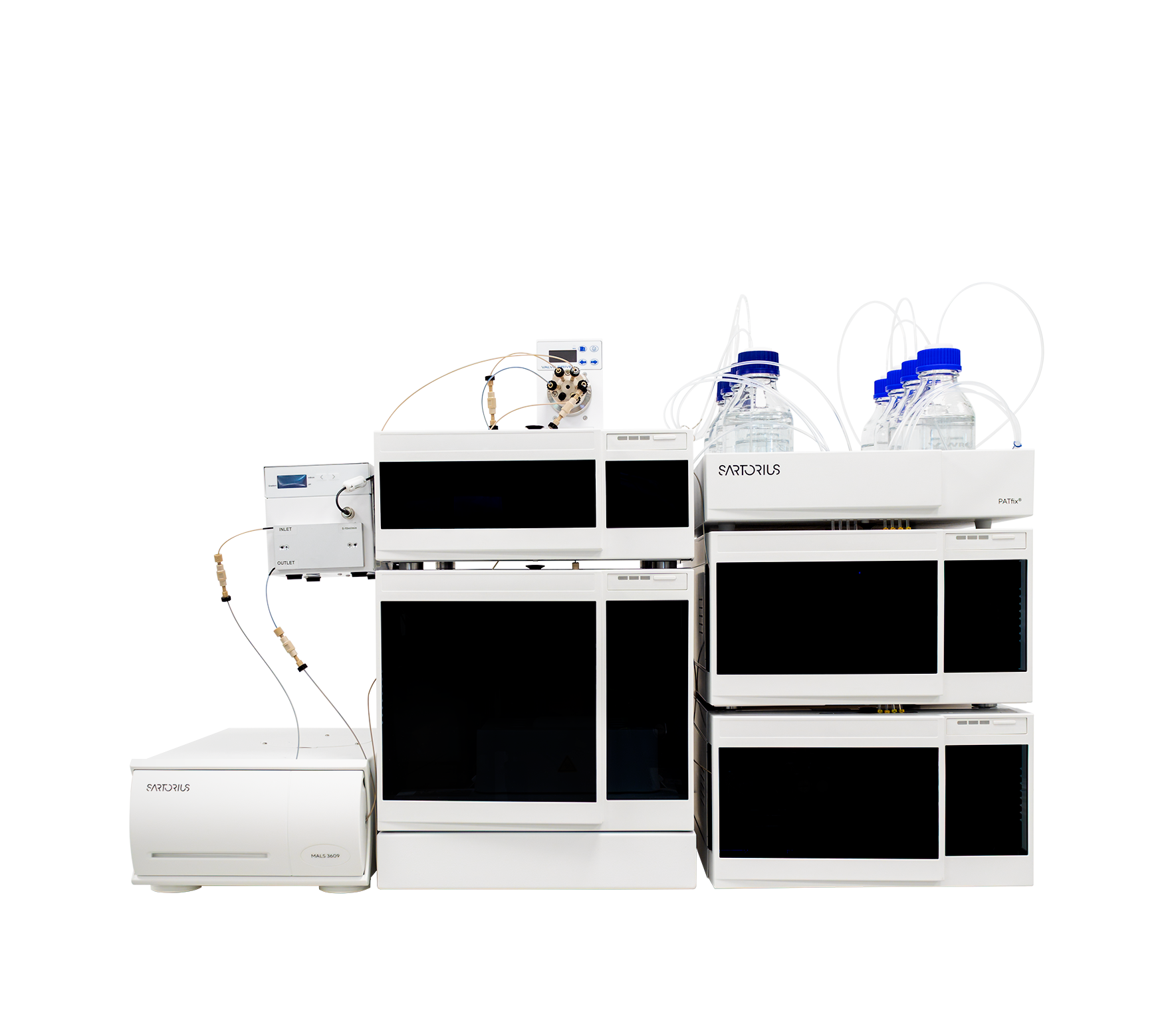
- PATfix® AAV Switcher Platform – All-in-one solution for USP monitoring
- PATfix® AAV Platform – All-in-one solution for AAV downstream process
- CIMac Analytical Columns
Related Posts
Optimizing AAV Processes: Strategies for Effective Purification and Analysis
This blog post addresses the challenges in AAV purification and analytics, highlighting the scientific approaches to enhance product quality
Advancing AAV Purification at the Golden Leaf Biomanufacturing Training and Education Center
BTEC at NC State University Enhances AAV Purification with PATfix Platform Integration of PATfix improves viral vector research efficiency and effectiveness, says Shriarjun Shastry The Golden Leaf Biomanufacturing Training and...
AAV8 Capture Purification: Comparing Ion-Exchange Monolith and Affinity Resin
Recent advancements in chromatography have significantly boosted AAV production yields. CIMmultus® SO3 monolithic column, a strong cation exchanger (CEX) for AAV capture purification, has shown a remarkable 30% increase in...
The Story of Citric Acid and Non-Reproducibility in Empty/Full AAV Separation: What Could Go Wrong?
Citric ions cause binding competition and magnesium chelation. Small adjustments in your DSP lead to better result.